Sounding out words accurately is an essential reading skill, but it does not show that a child understands what the words mean together. Reading grows when children can decode, picture the action, connect ideas, and retell what happened in their own words.
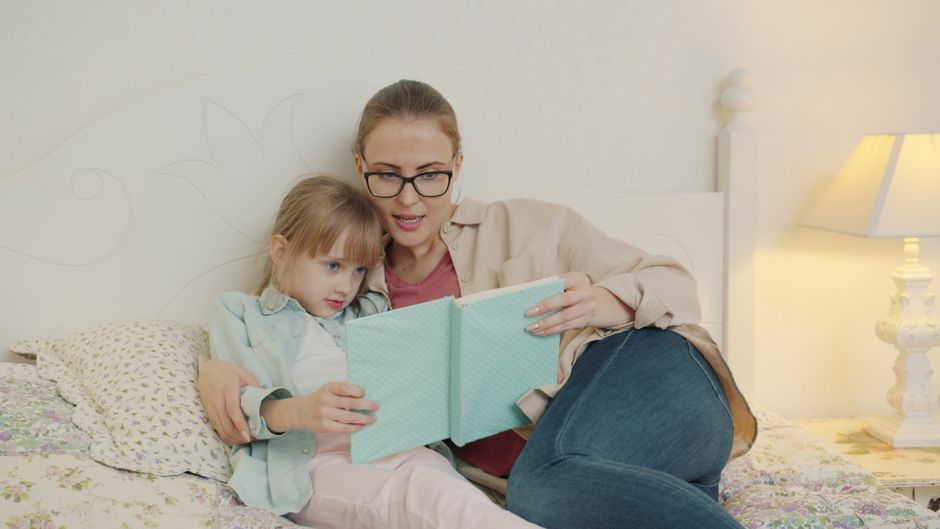
At 8:17 p.m., Amira sits cross-legged at the end of her bed in Bristol, still wearing one purple sock, while her dad holds a small book open under the lamp. She reads the sentence slowly and flawlessly: “The fox hid the seed beneath the stone.”
Every sound lands cleanly. Fox. Hid. Seed. Beneath. Stone.
Her dad asks what happened.
Amira looks at the page, then at him. “The fox was outside?”
The bedtime story is nearly over, and tomorrow’s library book has to go back. More importantly, the sentence has passed through her mouth without becoming a picture or an idea she can carry into the next page. If reading stays there, she may learn to perform the sounds while stories remain locked behind them.
This is an invented composite, but the moment will feel familiar to plenty of families: a child reads every word correctly, then cannot say who did what, why it mattered, or what might happen next.
Decoding opens the door to meaning
Phonics gives children a reliable way into unfamiliar words. When a child can hear the sounds in “ship,” blend them, and read the word, they have done real work. That success deserves recognition.
It is also the beginning of the reading process.
A sentence asks for several things at once. The reader needs to hold words in memory, understand their meanings, notice how they relate, and build a little scene in their mind. “The fox hid the seed beneath the stone” carries more than six decoded words. Someone acted. Something was hidden. A place matters. The sentence creates a question: why hide a seed there?
Children who are still working hard to decode often have little attention left for that bigger job. Their brain is busy assembling sounds, one piece at a time. With practice, common patterns and words become easier to recognize, leaving more room to follow the story.
That is why a child can read aloud smoothly and still need help with comprehension. The goal is not faster recital. The goal is for the words to become meaning while the child is reading them.
A blank retelling is useful information
When Amira says, “The fox was outside,” her dad has learned something useful. She may know the individual words but have missed the action. She may be tired. She may understand “hid” but not “beneath.” She may be waiting for an adult to supply the answer because questions about books have started to feel like tests.
None of those possibilities calls for a lecture or a harder book.
A small, specific prompt can reopen the sentence:
“What did the fox do with the seed?”
“Can you point to where it hid it?”
“What do you think the fox might do next?”
These prompts ask the child to return to meaning, rather than defend a wrong answer. If the answer is still unclear, make the sentence physical. Put a coin beneath a cushion. Ask the child to hide a pencil behind a book. Then read the line again.
The difference matters. “What does beneath mean?” can feel like a school question with one expected response. “Can you put the coin beneath the cushion?” gives the word a place to live.
This is also why reading activities need more than isolated word drills. Children need chances to hear a sentence, arrange its parts, choose a word that fits, and move through a short story with an adult or a character they care about. Each task links print to language, rather than treating reading as a race through a word list.
Keep the story alive while skills build
A child does not need to master every sound pattern before enjoying a story. In fact, story enjoyment gives practice a reason to matter.
At the next bedtime reading, Amira’s dad pauses after one sentence instead of after every line. The fox has found a garden. Amira reads “garden” with help, then notices the picture of the stone wall. Her dad asks where the seed is now. This time she taps the page: “Under the stone, so nobody takes it.”
A few pages later, she predicts that the fox will come back for it.
That prediction is a meaningful reading move. Amira is tracking an idea across the story. She is no longer only proving that she can pronounce the words.
For early readers, the best questions are often short and close to the text:
- Ask “who did that?” after an action.
- Ask “where are they now?” when the setting changes.
- Ask “what do you think happens next?” before turning the page.
- Ask the child to tell the story to a toy, sibling, or grandparent after reading.
There is no need to ask all four after every page. One good question keeps the reading warm. Too many can turn a shared book into an oral exam.
The same principle matters in learning games. A child should be doing the real skill inside the play, with a reason to pay attention to the words and their meaning. As explored in Educational screen time vs intrinsic learning, the activity itself should carry the learning rather than placing it behind a separate reward.
Return to the sentence tomorrow
Comprehension develops through repeated, low-pressure encounters with language. Read the same short book again. Let the child retell it differently. Point out one useful word when it returns. Build confidence without pretending that accurate decoding has completed the job.
The following evening, Amira reaches for the fox book herself. Before her dad asks, she says, “He hid the seed so it would stay safe.” Then she tucks the book under her pillow, with the purple sock finally found.
Comments
No comments yet.