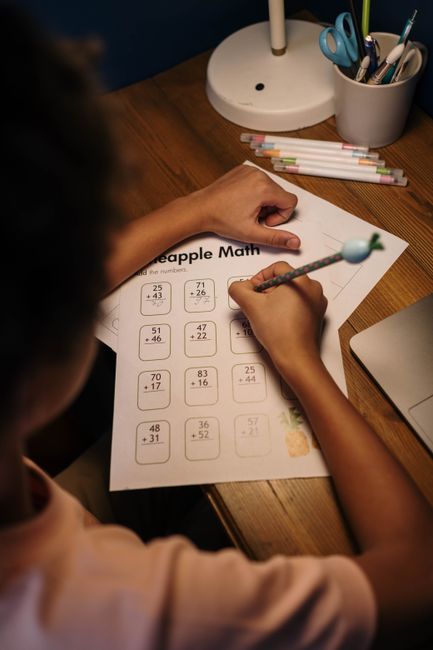
At 9:07 on a Saturday morning, the fractional equations app was closed with a swipe, the small, unfinished practice session evaporating into the tablet's ether. This immediate closure, mid-task, highlights a common challenge: when learning feels like a chore, children disengage, putting carefully planned screen time to waste.
In 1985, Coca-Cola introduced "New Coke," a reformulated version of its flagship beverage, after years of market research and taste tests indicated consumers preferred a sweeter flavor. The company confidently launched New Coke on April 23, pulling the original formula from shelves. Consumers, however, quickly rejected the change, not because the taste was objectively worse, but because of a deep emotional attachment to the original. Calls flooded Coca-Cola's customer service lines, with some people reportedly stockpiling old Coke. The backlash was swift and intense, reaching such a fever pitch that the company decided to reverse course, bringing back "Coke Classic" just 79 days after the new formula's launch. This decision, as The New York Times reported, was less about taste and more about acknowledging the profound emotional connection consumers had to the familiar.
When Practice Feels Like a Chore
The challenge with many educational apps today is that they present learning as a series of isolated tasks, much like a digital worksheet. A child opens an app, tackles a set of fractions, and when the novelty wears off or the difficulty spikes, they close it. There's no larger narrative, no visible consequence to an unfinished session, and no deeper reason to return beyond the immediate task. This mirrors the New Coke debacle: the product might be designed efficiently, but it fails to connect with an underlying, perhaps emotional, need to engage. The result is disengagement, not mastery, and a persistent cycle of starting and stopping.
The initial motivation for a child to engage with a new learning activity is often extrinsic, driven by a parent's encouragement or the app's initial novelty. However, for sustained learning, that motivation needs to become intrinsic. If the act of learning itself is not rewarding, if solving a problem doesn't visibly contribute to a larger, more meaningful goal within the game, then the child's attention quickly wanes. This is why a simple math problem, presented in a quiz format, often feels like work. It lacks the internal feedback loop that makes engagement feel natural and self-sustaining. The experience becomes transactional, not transformative.
The Power of Intrinsic Integration
Imagine a different scenario: solving a fraction problem isn't just about getting a tick mark; it's about powering a machine that lifts a bridge in a magical clockwork world. Each correct answer visibly contributes to repairing and lighting up their island. The learning isn't a gateway to fun; it is the fun. This is what we call intrinsic integration. It’s a core design principle where the mechanism of play and the act of learning are one and the same. There are no separate mini-games or external rewards like spinning wheels or loot boxes. The progress a child makes in mathematics, reading, or logic directly impacts the persistent world they are building.
This approach creates a powerful feedback loop. A child doesn't just learn fractions; they learn that mastering fractions helps them grow their world. This tangible connection gives children a genuine reason to return, not because of a fleeting streak counter or manipulative reward, but because their effort has a visible, lasting impact. The child builds not just skills, but also ownership and attachment to their unique world. Just as consumers felt a deep connection to the classic Coke, children develop an attachment to their growing digital world, an attachment that fosters a natural desire to engage with the learning that drives its expansion. Why does a child care about finishing their island, but not a quiz? delves deeper into this phenomenon.
Building a World, Not Just Skills
Jambolino embraces this idea of earned wonder. Every correct answer, every new concept mastered, makes a tangible difference in their unique, persistent world. Whether it's the brass gears of Clockwork Isle spinning to life, the leaves in Wordwood rustling into new structures, or the vibrant hues of Rainbow Land extending, the child sees the direct result of their learning. This persistent world acts as a living record of their progress and a constant invitation to return.
The return of Coke Classic in 1985 wasn't a failure, but a powerful lesson in understanding emotional connection. Similarly, for learning apps, the real win isn't just delivering content, but cultivating a deep, intrinsic connection that makes children want to engage. When learning visibly grows a world they care about, the fractional equation app won't be closed mid-session on a Saturday morning. It will be opened, not out of obligation, but out of a genuine desire to see what new part of their world they can bring to life.
Respecting the Child's Journey
Our design philosophy also ensures a child-friendly, low-pressure experience. There are no punitive streaks, no countdowns, and no manipulative reward loops. Instead, the focus is on celebrating genuine mastery and providing adaptive challenges that meet the child at their productive difficulty level. If a child struggles, the system gently steps down, offering support without making them feel inadequate. This nurturing environment, combined with the power of a persistent world, creates a learning experience that respects the child's pace and fosters a love for discovery.
Comments
No comments yet.