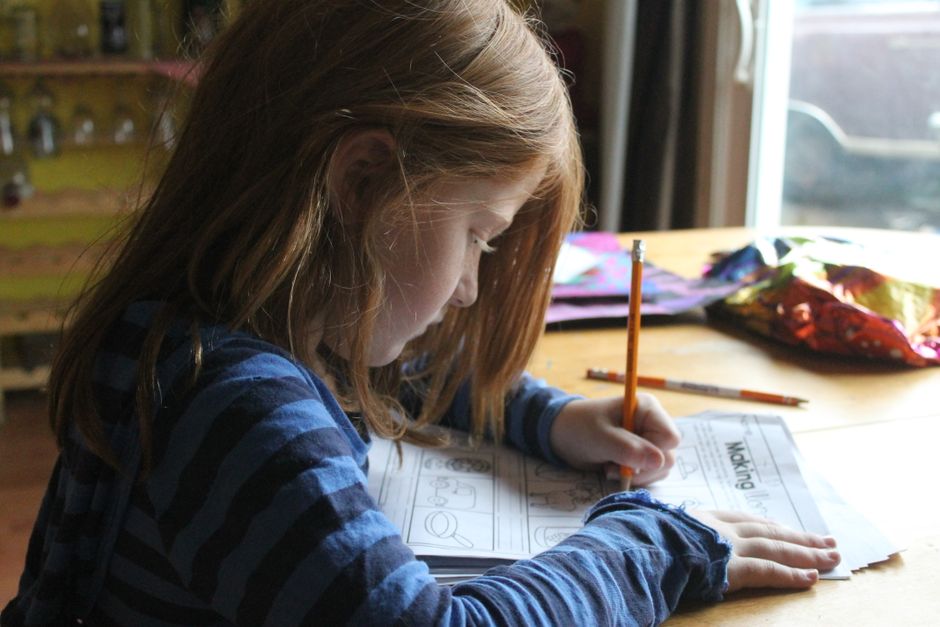
A child is more likely to practise blending when decoding each word causes something meaningful to happen. Connect the reading task directly to repairing a place they care about, and the blank worksheet becomes a problem they can solve inside the story.
In April 1970, the Apollo 13 crew faced rising carbon dioxide inside the lunar module. The command module carried square lithium hydroxide canisters, while the lunar module’s system accepted round ones. The equipment needed to keep Jim Lovell, Jack Swigert and Fred Haise alive did not fit.
On the ground in Houston, NASA engineers had to build an adapter using materials already available aboard the spacecraft. Flight controllers passed the procedure to the crew, who assembled the improvised device before anyone knew with certainty that it would reduce the carbon dioxide. NASA’s account of the mission documents both the mismatch and the solution.
Every piece mattered because every piece changed the situation. Tape held something together. A hose moved air. A cover helped form the adapter. Nobody needed a score bar to make the work feel consequential.
The stakes at a kitchen table are incomparably smaller. The useful connection is mechanical: a task becomes easier to begin when the person doing it can see what the task changes.
The Sunday-night standoff
It is 7:12 on Sunday evening. The reading worksheet is still blank.
A parent points to the first word. The child looks away, taps the pencil, asks for water and says the page is boring. The adult knows the child can blend the sounds. That makes the resistance more frustrating, because the problem appears to be willingness rather than ability.
The worksheet asks for a real reading skill. The child must look at the letters, recall their sounds, hold those sounds in sequence and blend them into a word. Yet the page gives the action no visible consequence beyond completing the next line.
A score bar changes the display after the answer. It rarely changes the meaning of the answer. The child decodes “ship,” receives a tick or a burst of confetti, then faces another word. Reading functions as the toll paid to continue.
That pattern can make a learning game feel remarkably close to homework. The decoration moves. The underlying bargain stays the same.
When the decoded word repairs Wordwood
In Jambolino’s Wordwood, reading drives the world itself. A child works with letter sounds, blending, spelling, sight words, sentences and stories. Solving those challenges earns Leaves that grow and restore structures in a persistent forest.
Take the same blending task from the worksheet. The child still has to combine sounds accurately. The curriculum has not disappeared behind an animation. The difference lies in what happens next: the decoded word helps repair part of Wordwood, and the restored place remains there when the child returns.
That visible consequence gives the word a job.
The child can enter illustrated structures and interact with completed buildings after construction. Progress changes a place rather than filling a temporary meter that resets at the end of the round. This is the principle behind asking what a child has to think about to make the game move: the learning action should operate the interesting part.
Jambolino also adapts the starting level and schedules review around each child’s mastery. Skip-ahead checks let fluent readers move past material they already know. After repeated struggle, challenges gently step down. That matters because a meaningful mechanic cannot rescue a task pitched far above or below the child’s current skill.
Motivation without turning up the noise
Many children’s apps try to solve reluctance by adding louder rewards. Coins spray across the screen. A countdown creates pressure. A streak threatens to disappear. A loot box promises a surprise after one more round.
Those devices can produce another tap, but they direct attention toward the reward system. The reading becomes an interruption between prizes.
Wordwood uses a quieter loop. Decode the word. Help the forest recover. Return later and find that the repaired place still belongs to your child’s world. There are mastery badges and session summaries, but no streak loss, countdowns, advertisements, in-app purchases or loot boxes. The absence of noisy rewards can reveal what a child actually learned.
Parents can review real skill progress and receive weekly email digests. Each child profile keeps its own language, mastery state and world, which helps when siblings share a tablet or a parent’s phone. Spoken instructions support pre-readers, and the learning can continue in a browser without requiring a download.
Give the next word a job
A parent facing the 7:12 standoff can use the same principle away from any screen. Ask the child to decode a label needed for a recipe, read the clue that reveals where a book is hidden or blend the word that selects the next part of a bedtime story. Keep the reading task genuine, then give its answer an immediate consequence.
Do not add a prize to every word. Change what the word controls.
That was the practical force of NASA’s improvised Apollo 13 adapter. Each ordinary material became part of a working system, and the completed system changed the crew’s situation. At the kitchen table, the goal is simpler: let each decoded word repair something the child can see, remember and want to return to.
Comments
No comments yet.