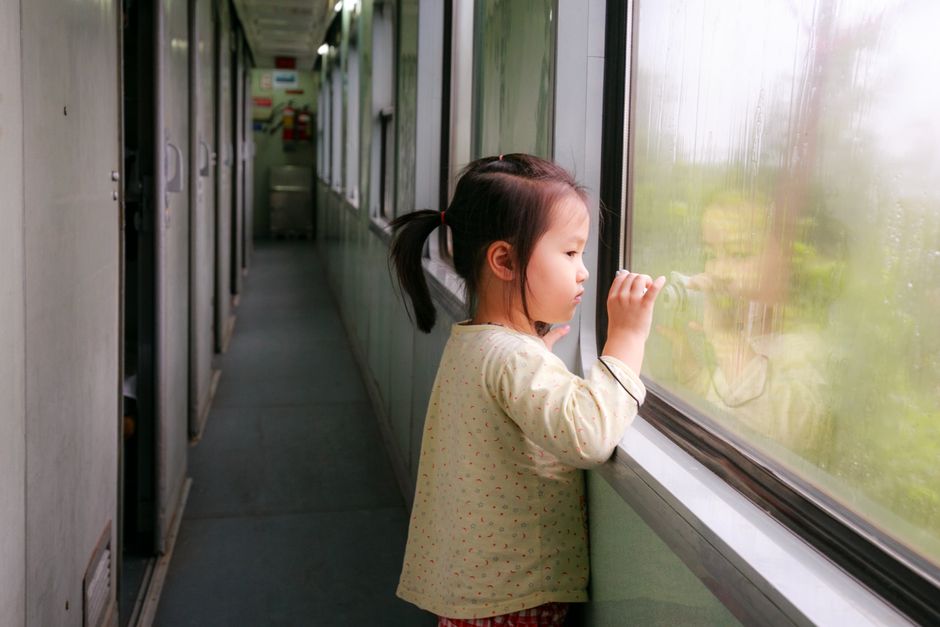
Children learn more from a stuck train when they can trace the route, spot the faulty instruction, and repair it themselves. That kind of play builds the habit behind coding: pause, inspect, predict, change one thing, then see what happens.
On a rainy holiday afternoon, the train in Signal Works rolls toward its station and stops one tile short. The child has already placed the route tiles. The track looks close enough. But one instruction points the engine the wrong way, or a repeat sends it around one loop too many.
There is no timer flashing in the corner. No streak to protect. The useful next move is quieter: follow the instructions from the beginning and ask where the train first stops doing what the child expected.
That is a real piece of reasoning. A child might swap one route tile, run the program again, and watch the signal light as the train reaches home. The correction has a visible result in the railway scene, which gives the work a purpose beyond choosing an answer.
A small error can change the whole route
In 1969, Apollo 11’s lunar module computer began issuing program alarms as Neil Armstrong and Buzz Aldrin descended toward the Moon. The landing still had to happen, and the people monitoring the alarms had to decide whether the computer could keep doing its job.
At NASA’s Manned Spacecraft Center in Houston, guidance officer Steve Bales consulted Jack Garman, a computer specialist who had studied the alarm codes. Garman recognized the 1201 and 1202 alarms as overload warnings, not proof that the computer had failed. The computer was dropping lower-priority work and continuing with the calculations needed for landing. Bales recommended that the crew continue.
The cause was later traced to the rendezvous radar being left in a setting that added unnecessary computer work during descent. One configuration choice created a problem that looked much larger from inside the moment.
NASA documents the mission and the computer alarms in the Apollo 11 Flight Journal. The point for a child working through a route is not that a train puzzle carries Apollo-sized stakes. It is that a system can look broken when one instruction, setting, or assumption is off. Careful inspection turns a frustrating stop into a solvable problem.
Let the child see cause and effect
“Try again” can feel empty when the child cannot tell what changed. A route activity becomes more useful when every tile has a job the child can observe.
In Jambolino’s Signal Works challenges, children route trains, predict programs, fix instructions, use repeats, and reason about branches. The learning action operates the railway. They are not filling out a coding worksheet and then receiving a separate reward. The track, signal, train, and destination show the consequence of the program they made.
That matters when a child gets something wrong. Instead of treating the result as a verdict, the scene can show a stalled route or a missed destination. The child can revisit the sequence, alter a tile, and test the new idea. That sequence helps them separate “my first plan failed” from “I cannot do this.”
For parents, the useful question after a short session is simple: “What did you change to get the train home?” It invites the child to explain their thinking without turning play into another test. What Did Your Child Work Out to Make That Happen? explores why that question can reveal more than a score.
Productive difficulty needs room to breathe
A train stopping one tile short is only interesting when the child has enough information to investigate it. If the route is too long, the controls too small, or the feedback too vague, the problem becomes friction.
Jambolino adapts server-graded challenges toward a productive level of difficulty and can step down after repeated struggle. Children can also skip ahead when material is already familiar. The goal is a challenge that asks for thought while leaving a believable path to the next attempt.
That is especially important on a family tablet during a few spare minutes. A child should be able to return to their own profile, their own language, and their own persistent world without losing progress to a shared-device mix-up. The parent can later see real skill progress and a weekly digest, while the child gets to remember the moment the signal finally lit.
Apollo 11’s computer did not need every task completed at once. It needed the right work to continue. A child facing one faulty route tile needs the same kind of clarity: find the part that matters, change it, and watch the train move.
Comments
No comments yet.