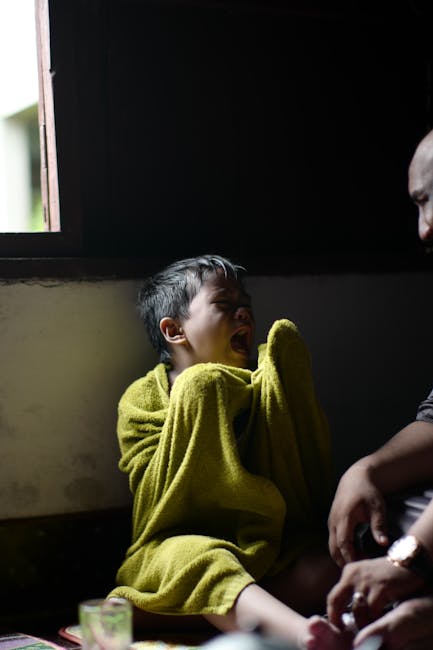
Reward wheels can turn a completed lesson into a gamble, shifting a child’s attention from what they learned to whether chance delivers the promised prize. When the wheel withholds that prize, frustration can erase the satisfaction of finishing the challenge.
At 4:17 on a rainy Tuesday in Bristol, eight-year-old Theo completed a difficult fractions lesson at the kitchen table. His school jumper was still on, one sleeve damp from the walk home, and he had already corrected the same answer twice. The screen released a reward wheel. A glowing costume sat between smaller prizes, and Theo had been waiting all week to win it.
He pressed the button. The wheel slowed beside the costume, clicked once more, and landed on a handful of ordinary tokens.
Theo stared at it. Then his eyes filled.
“I did the whole lesson.”
His dad reached for the tablet, unsure what to say. Theo had done the work. He had persisted through two mistakes. Yet the prize presentation had quietly rewritten the agreement: effort would earn a chance, and chance could still say no.
Theo pushed the tablet away. The fractions were forgotten.
When chance takes credit for the achievement
Theo is an invented composite, but the tension in his scene is easy to recognise. A child finishes something demanding, then a bright animation places the emotional climax somewhere else.
The learning challenge had offered a clear relationship between action and outcome. Compare the fractions carefully, revise the wrong answer, and reach the solution. The wheel replaced that understandable relationship with uncertainty.
This changes what success means. Instead of thinking, “I worked it out,” the child waits to discover, “Did I get the good prize?”
That uncertainty can be exciting, which explains why random rewards appear so often in games. It also creates a second contest after the lesson. A child can succeed at learning and still feel that the session ended in failure.
The problem grows when the desirable reward appears visibly close. A wheel that stops one space away makes loss feel personal, even though the child never controlled the result. The animation says “almost,” while the system has already decided “no.”
For a child who has spent several minutes recovering from mistakes, that final disappointment can carry more emotional weight than the learning victory before it. The peak-end rule matters here: people often remember the most intense moment and the ending. Theo’s ending was the prize slipping away.
Rewards work better when they preserve cause and effect
A learning game still needs delight. Children enjoy collecting, building, discovering and seeing a world respond to them. The important design choice is what connects their action to that response.
A strong reward has a legible cause: solve the problem, power the machine. Decode the word, deliver the letter. Complete the rhythm, wake the instrument. The child can point to what changed and understand why.
Jambolino uses this relationship across persistent subject worlds. Solving real learning challenges earns world-specific currency for building and upgrading structures. Completed buildings remain explorable, so the result becomes part of the child’s world rather than disappearing behind another spin. Server-graded challenges adapt to each child’s mastery while review returns when it is useful.
That approach protects the child’s sense of agency. The world grows because the child learned something and acted on it. Chance does not take the final bow.
The same principle appears in what happens when fractions move the game forward: the learning action should produce the interesting consequence. When an unrelated reward system becomes more exciting than the mechanic, the lesson starts to feel like a toll booth.
Removing the pressure to keep chasing
Random rewards rarely stand alone. They often sit beside countdowns, streak loss, limited attempts or prompts to continue until the desired item appears. Each device raises the emotional cost of stopping.
For Theo, another spin would have offered an obvious escape from disappointment. One more lesson might restore the chance to win. Then another. His choice would no longer be guided by curiosity or readiness to practise fractions. It would be guided by the unresolved prize.
This is the pattern explored in what Maya’s “one more” revealed about curiosity. Repetition can look like engagement from across the room, while the child may actually be trying to close a loop the product deliberately left open.
Jambolino avoids loot boxes, streak loss, countdowns, advertisements and in-app purchases. Children receive session summaries, mastery badges and a welcoming return moment. Progress waits for them. Nothing threatens to disappear because bedtime arrived.
Let the learning victory be the ending
Theo’s dad closed the reward screen and drew two rough fraction bars on a scrap of shopping-list paper. “Show me the one you fixed,” he said.
Theo hesitated. The costume was still gone, and that disappointment did not vanish on command.
Then he shaded the bars and explained why one fraction was larger. His dad listened through the whole explanation. No wheel appeared afterward.
The next Tuesday, the better ending would be visible before Theo stopped playing: a bridge repaired, a lamp glowing, or a structure ready to enter because he solved the challenge. He could leave the table carrying one clear thought with him.
I made that happen.
Comments
No comments yet.