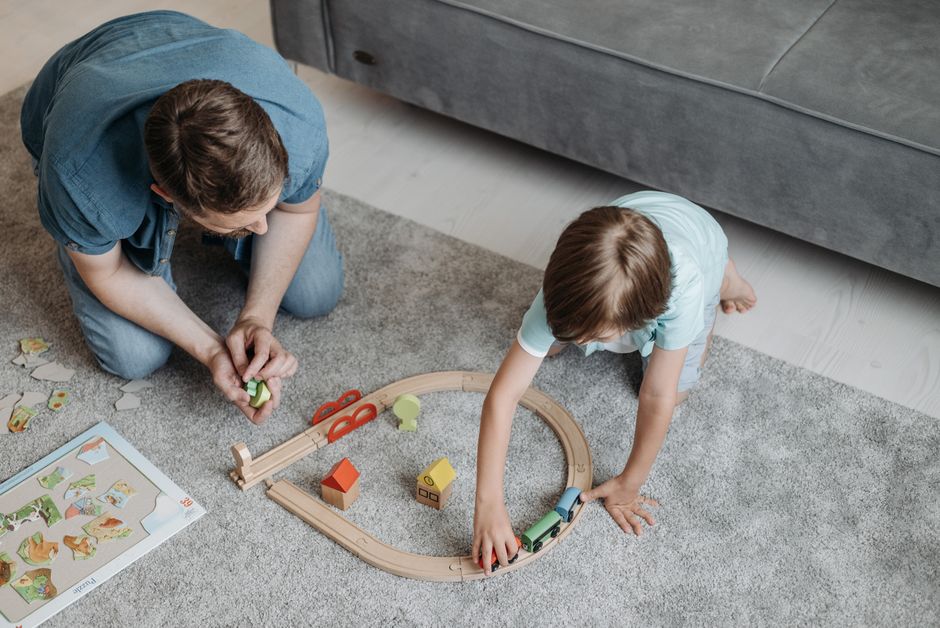
A useful dinner-table test asks two things: does the game require your child to think, and can play continue without asking you to spend? Ten quiet minutes mean more when the child is solving a real problem and the parent never has to dismiss an advert, approve a purchase, or manage a reward trap.
Imagine Maya, an eight-year-old who keeps a felt-tip pen tucked behind one ear, sitting at the kitchen table at 6:18 p.m. Her dad, Leo, passes her the family tablet while he rescues a pan of rice and checks the vegetables in the oven. He needs ten minutes without hearing, “What do I press?”
Then a purchase screen appears.
Maya calls him over with the tablet held above her head. The next area is locked, and the bright button promises more play. Leo has wet hands, the rice is sticking, and Maya is already asking whether “only a little” money is okay. If he refuses, her play ends in disappointment. If he agrees, a quiet hand-off becomes a spending decision made under pressure.
That moment reveals what the game was designed to ask of the family.
Watch what interrupts the child
The hand-off test starts after you pass over the device. Stay close enough to notice the first interruption, but resist directing every tap.
Does the game ask your child to compare quantities, decode a word, predict what will happen, route a train, or listen for a change in pitch? Those actions make thinking part of play. The child operates the object because understanding moves the scene forward.
Now notice what breaks that thought. An advert can arrive between the problem and the answer. A shop prompt can replace curiosity with negotiation. A countdown can turn exploration into urgency. Lena’s fraction problem shows how an advert can break a child’s thought before the answer.
Silence alone proves little. Maya might be reasoning through a pattern, watching an advert, or tapping the same glowing button to collect rewards. The better clue is what she says when time is up.
“I made the train reach the station” describes cause and effect.
“I got 400 gems” describes a reward balance.
“Can I buy the next one?” tells you who the game expects to act next.
Look for thinking inside the play
A learning game earns its place at the table when the learning action changes the world. Fractions can balance a machine. Correct instructions can route a train. Letter sounds can power a reading world. A science prediction can lead to a visible result.
This matters because children quickly detect a worksheet wearing a costume. If the real activity is answering detached questions so they can return to the entertaining part, learning becomes the toll booth. The child learns to rush through it.
Jambolino takes a different approach. Children solve server-graded, adaptive challenges to build and restore persistent subject worlds. The activity can gently step down after repeated struggle, schedule later review, or offer a skip-ahead check when the starting material is already familiar. Progress comes from demonstrated skill, while buildings, interiors, and world changes give that effort a visible consequence.
There are no advertisements, in-app purchases, loot boxes, public child profiles, or chat. During the current beta, Jambolino is free, with no subscription. Future commercial plans have not been announced.
That combination changes the dinner-table dynamic. The next request can stay about the problem on screen instead of becoming a negotiation about money.
Notice how the game handles struggle
The most revealing minute may be the one after a wrong answer.
A child-friendly game should make another attempt feel possible. It can repeat spoken instructions for a pre-reader, reduce the level after repeated difficulty, preserve progress, and welcome the child back without punishing a missed day. It should avoid turning frustration into a sales opportunity.
Back at Maya’s table, Leo closes the locked game and opens one where she can route a train by arranging instructions. Her first route sends it toward the wrong branch. The scene shows where the instructions failed, and she tries a different order.
The oven timer sounds before the train reaches its destination.
For a moment, Maya might abandon it. Instead, she points to the first instruction and says, “That one sends it the wrong way.” She changes the route, watches the train arrive, and hands back the tablet when dinner reaches the table. The landing is small but telling: she leaves with an explanation, not a purchase request.
If your child gets stuck without you taking over, this guide offers a practical way to help while preserving their ownership of the problem.
Run the test at your next hand-off
Choose one ordinary ten-minute window. Hand over the tablet, then observe three moments: the first interruption, the first mistake, and the final sentence your child says about the session.
You do not need a complicated scorecard. Ask yourself:
- Did the child manipulate, predict, decode, calculate, or reason?
- Did a mistake produce useful feedback and another possible move?
- Did play continue without an advert, purchase prompt, countdown, or streak warning?
- Could the child explain what changed in the game?
Tomorrow night, Leo already knows what to listen for. The rice may still need rescuing. Maya’s next interruption, though, can be the sound of a train reaching home.
Comments
No comments yet.