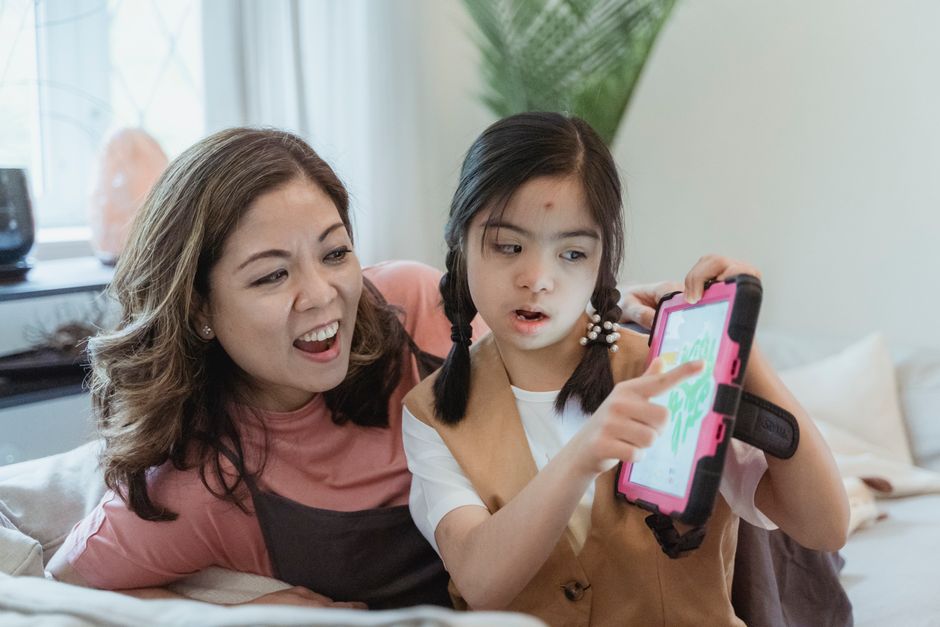
A learning activity earns its play-based label when the child must use the target skill to make the experiment work, complete the melody, or get the route home. If the activity pauses for unrelated questions and hands out coins for answers, the play is decoration around a quiz.
Check what the child actually does
Watch the first minute without reading the app’s description. Ask: what action produces progress?
In a science activity about sinking and floating, a child should make a prediction, place an object in water, see the result, and use that result on the next challenge. Tapping “boat” after a spoken question about buoyancy can still teach a fact, but the science is not driving the activity.
In a coding route, the child should arrange instructions, run the program, notice where the train stops, and repair the route. Choosing “turn left” from three answers while an animated train runs in the background asks for recall. The train has no real job.
In a music activity, listening should matter. A child might echo a rhythm, compare two pitches, or choose the melody that rises. A flashing stage and a multiple-choice question about instruments create a different experience.
Look for a visible cause and effect: “I changed this, so that happened.” That is the useful signal.
Check whether a wrong answer teaches through the activity
Children need room to be wrong without being treated as if they have failed a test. A strong learning game makes the mistake understandable in the world itself.
A route that hits a blocked track gives a child evidence about the instruction they chose. A balance challenge that tilts after too many weights gives a reason to try a different arrangement. A spelling activity that lets a child hear sounds again and move letter tiles gives them another route into the word.
That does not mean every wrong answer needs a long explanation. Short sessions work well for children aged 5 to 11. It means the next attempt should connect to the child’s action, rather than simply showing a red mark and moving on.
Check for these signs:
- The child can see or hear what their choice changed.
- A retry preserves enough context to make a new attempt meaningful.
- Help gives a clue, example, or replay rather than revealing the answer immediately.
- The activity avoids punishment for stopping, struggling, or returning another day.
A counter, streak, or spinning reward can make a child try again too. It tells you little about whether they understood more.
Separate the reward from the reason to continue
Rewards are not automatically harmful. A completed building, a new island light, or a badge can mark effort and make progress visible. The question is what the reward asks the child to care about.
A useful reward follows learning progress. For example, a child solves a real set of rhythm challenges, earns currency for the music world, and uses it to build something that remains part of that world. The reward reflects what they practised.
Be cautious when rewards arrive mainly for speed, daily attendance, random drops, or repeated tapping. Those systems can pull attention away from the task itself. A child may chase the next box, timer, or streak instead of listening closely to a pattern or testing an idea.
Try asking your child one simple question after a session: “What did you work out to make that happen?” Their answer can tell you more than a high score. If they can describe the route they fixed, the clue they used, or why an object sank, the activity gave them something to think with. What Did Your Child Work Out to Make That Happen? explores that question in more detail.
Check whether the difficulty responds to learning
A good game needs challenge. Constantly easy questions become tapping. Constantly hard questions turn a tablet session into an argument.
Look for activities that start from what the child can do, introduce a manageable stretch, and revisit skills later. A child who already understands early addition should not have to clear many identical problems before reaching a harder one. A child who repeatedly struggles should receive simpler steps or useful review, not a bright message telling them to keep grinding.
Parents do not need a dashboard full of charts. They do need a credible way to see what their child has practised and what is becoming secure. Weekly summaries and skill-level progress are more useful when they describe real learning, such as sentence building or fractions, rather than minutes played or points collected.
Look for boundaries that protect attention
The learning design matters more when it is not competing with advertising, in-app purchases, chat, public profiles, or pressure to maintain a streak. Those features can change the child’s goal from exploring a challenge to staying in the app.
Before handing over a device, check the parent settings and the first ten minutes of play. Can your child begin without an ad? Can they stop without losing a reward? Does the app ask them to buy something or compare themselves with strangers? A calm return screen and a persistent world can invite another session without manufacturing urgency.
For a broader safety and progress check, use this parent’s checklist for choosing a children’s learning game.
Try one five-minute observation this week
Sit nearby for one short activity. Do not coach at first. Write down the skill, the action your child took, what changed after it, and what made them try again.
Keep the app if those four notes form a clear chain: “She heard the rhythm, tapped it back, heard where it differed, then tried a slower pattern.” If your notes instead read, “He answered five questions and opened a chest,” the learning task may need a more central role.
Comments
No comments yet.