A child learns more from a sinking experiment when they must predict the outcome before they see it. Their choice gives the result something to confirm, challenge, or overturn.
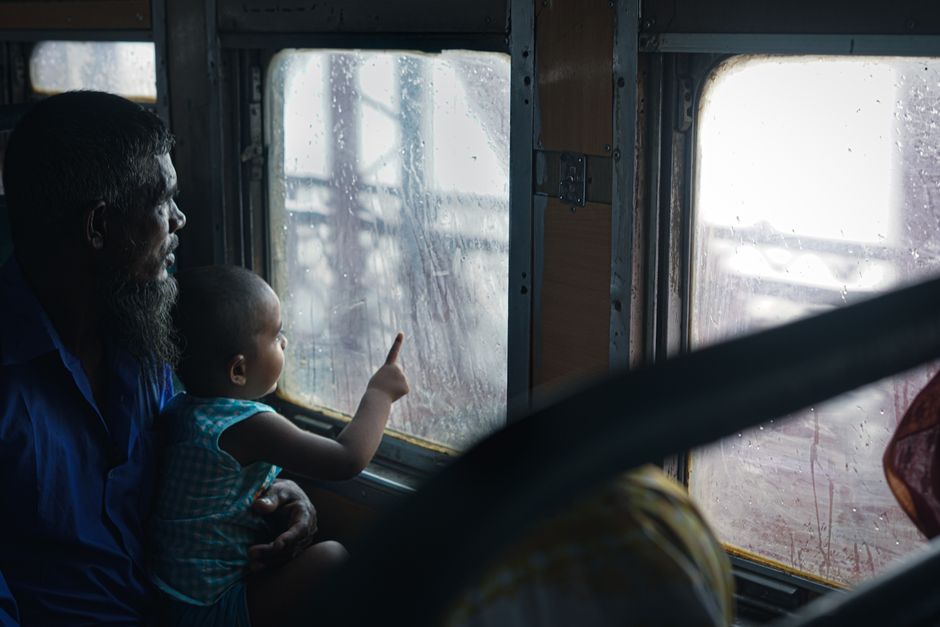
Imagine Mara, an invented eight-year-old with damp socks and a habit of taking every toy apart, standing beside a rain-streaked window at 5:40 on a Tuesday evening. Her dad has said dinner will be ready in ten minutes. On the tablet, a small boat waits above a tank of water.
Mara hears the spoken prompt and studies the boat. She has to decide: will it float or sink?
She taps “float.”
The boat enters the water because she made a prediction. For one suspended moment, she watches the hull settle. If the experiment simply announces an answer now, her guess becomes disposable. She could tap through, collect a reward, and leave without understanding what happened.
Instead, the boat begins to respond.
A prediction gives the child something to lose
Prediction changes the emotional shape of a science activity. Before the choice, Mara is observing someone else’s question. After the choice, the outcome belongs to her.
She leans closer. The boat rides low, and doubt enters the room.
“Maybe I got it wrong.”
That sentence matters. Mara has formed an idea strong enough to test. She now wants evidence because the evidence could prove her wrong. The screen has created a small but genuine stake: her explanation of the object may fail.
This is where a good learning game must resist the urge to hurry. A bright tick, a shower of coins, or an instant “Correct!” would pull her attention away from the experiment. The useful tension lives in the short space between prediction and result.
The toy boat steadies. It floats.
Mara’s first response is relief. Her second is curiosity. She wants to know what would make it sink.
That shift is the lesson beginning to take hold.
The experiment should carry the learning
In Jambolino’s playable science challenges, children predict, test, and watch an apparatus respond. Their answer drives the event on screen. A sinking challenge uses the object and water as the centre of the activity, rather than placing a conventional quiz beside decorative science artwork.
This distinction becomes easy to see when you ask a blunt question: what did the child actually do?
Did Mara select a word from a list and receive a badge? Or did she commit to an outcome, send the object into the water, and compare her idea with what happened?
The second version joins thought and action. The science becomes the mechanic.
That principle extends beyond floating objects. A child can complete a circuit, test a magnet, examine a food chain, compare friction, or control a variable in a playable investigation. The exact interaction changes, but the learning loop stays concrete: make a decision, cause an event, inspect the evidence.
It is the same test explored in What Did This Screen Ask Your Child to Do?. The most revealing measure of educational screen time is the thinking required from the child, not the educational label attached to the app.
Wrong predictions need somewhere safe to land
Now imagine the boat takes on water instead.
Mara watches it tilt, hesitate, and disappear below the surface. Her answer was wrong, and dinner is nearly ready. Her dad can see the familiar exit forming: the tightened mouth, the hand moving toward the tablet’s edge, the quick “I don’t care.”
If the screen scolds her or replaces the experiment with a red failure panel, the session may end there. She leaves remembering that science caught her making a mistake.
Jambolino handles repeated struggle by gently stepping down the difficulty and scheduling review. The child can see a correction, try again, and rebuild understanding without a countdown or lost streak hanging over the attempt. Server-controlled grading keeps the answer fixed, while deterministic validation checks learning items before they reach a child.
The aim is productive difficulty. A wrong prediction should create a reason to look again.
Mara’s dad points to the part of the boat now sitting beneath the water. She studies it, changes her next prediction, and runs another test. This time she is watching the object’s shape and load rather than guessing from its name.
The mistake has become evidence.
This also gives parents a clearer signal than activity completion. Finishing a screen says little about what a child understood. Mastery requires performance across a skill over time, with review when needed. That difference is explored further in Did My Child Master the Skill, or Just Complete the Activity?.
Ten minutes can leave a question open
At 5:50, Mara’s dad calls her to the table. She does not ask for a prize or worry about losing a daily streak. She looks back at the floating boat and asks whether a heavier one would behave differently.
The session ends with an unfinished question occupying her attention.
That is a valuable ending for short educational screen time. Jambolino’s sessions can last only a few minutes, and its persistent subject worlds give children a place to return without punishing an absence. There are no advertisements, in-app purchases, loot boxes, public child profiles, or chat. During the current beta, play is free.
Tomorrow, the boat can meet the water again. Mara will arrive with a theory.
Comments
No comments yet.