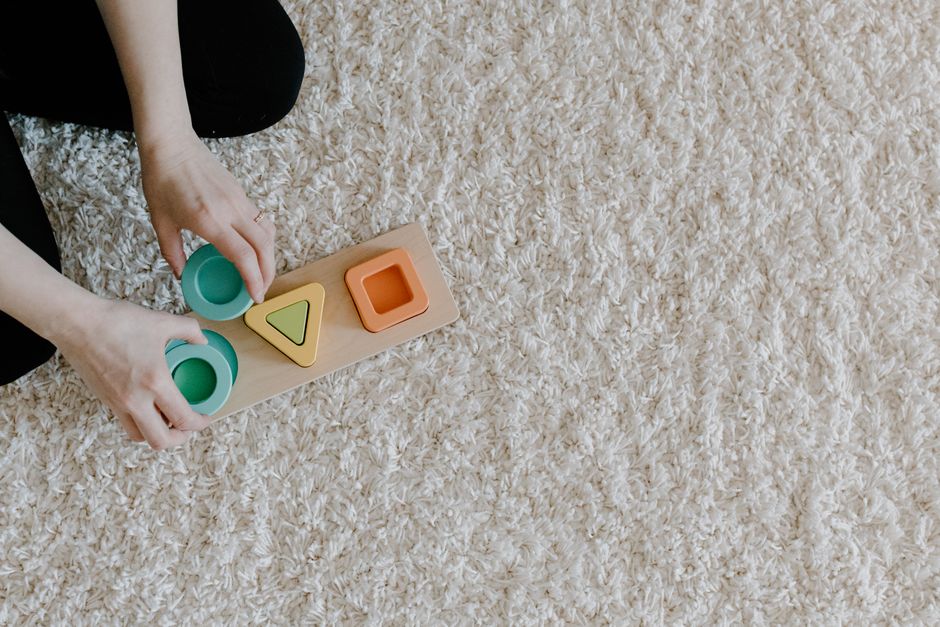
A useful screen-time measure asks what a child’s mind is doing during those minutes. Passive watching, repeated quiz tapping and active problem-solving can occupy the same 20 minutes while demanding completely different levels of attention, prediction, construction and recall.
In April 1970, Apollo 13’s crew faced rising carbon dioxide after an oxygen-tank failure forced them into the lunar module. The module’s filters could not support three people for the journey home. Worse, replacement square cartridges from the command module did not fit the lunar module’s round openings.
NASA engineer Ed Smylie and his team had to solve the problem using materials already aboard the spacecraft. NASA’s history of the mission records how the crew assembled an adapter from items including plastic bags, cardboard and tape. The materials were ordinary. Their arrangement mattered enormously.
A list of materials would reveal little about the work. A stopwatch would reveal even less. The meaningful questions are: What did the engineers notice? What did they predict? What did they build? What had to remain in memory while they tested the next step?
Those questions also give parents a more useful way to judge children’s screen time.
Equal minutes can contain unequal mental work
Consider three 20-minute sessions.
In the first, a child watches short videos selected automatically. The child may learn something, laugh or relax, but the experience can continue with little deliberate action. The next item arrives without requiring a prediction or decision.
In the second, a quiz app presents arithmetic questions. The child taps an answer, sees a tick or cross and moves on. This can support useful practice, especially when the questions match a skill the child needs to strengthen. Yet repetition alone can also become answer recognition: tap, react, repeat.
In the third, the child routes a train by arranging instructions, predicts where it will stop, runs the program and repairs it when the route fails. Here the child must hold a goal in mind, notice the result, compare it with the plan and change something specific.
All three sessions lasted 20 minutes. Only the activity reveals what those minutes asked the child to do.
This is why a doctor’s advice to balance school screen use with personal-device use deserves a second layer. Total exposure still matters, alongside sleep, movement, eyesight, family routines and how easily a child can stop. Within that total, the quality of the activity matters too.
Four questions reveal the work behind the screen
A parent does not need to watch every tap. Four questions can expose the shape of a session.
What did the child have to notice? Look for meaningful details: a number pattern, a letter sound, a circuit connection, a flag feature or the direction of a melody.
What did the child have to predict? Prediction turns attention into a testable idea. Which object will sink? Where will the train stop? What happens when this instruction repeats?
What did the child have to build or change? Moving a piece, constructing a word, balancing quantities or connecting a circuit gives the child’s thinking a visible consequence.
What did the child have to remember later? Useful practice returns to earlier skills after some time has passed. Immediate recognition feels fluent, while delayed recall gives better evidence that learning endured.
These questions also help separate intrinsic learning from a game wrapped around a worksheet. If the educational task merely earns access to an unrelated animation, the learning remains a tollgate. When the equation balances the machine or the decoded word restores part of a forest, the learning action drives the world itself.
That distinction is explored further in The Five Silent Minutes That Reveal What a Learning Game Is Really Training.
Productive difficulty leaves visible evidence
Good learning rarely looks like nonstop success. A child working at an appropriate level will sometimes pause, revise and try again.
The useful signal is recovery. After an incorrect attempt, does the activity help the child inspect the mistake? Does it gently reduce difficulty after repeated struggle? Does it revisit the skill later? Can a child who already understands the material prove it and move ahead?
Jambolino is designed around that kind of work. Children solve server-graded challenges across mathematics, reading, logic and coding, science, music and geography. The difficulty adapts by skill, while correct answers grow persistent subject worlds. A train route must work. A word must be assembled. A circuit must connect. The child’s action changes something they can see and return to later.
There are no ads, public child profiles, in-app purchases, loot boxes or streak-loss penalties. During the current beta, play is free in the browser, with child profiles and progress shared with the Android app.
The aim is neither to make every spare minute academic nor to excuse unlimited device use. It is to help families see the difference between consumption, rehearsal and thought.
Audit one session by its ending
Choose one session this week and ignore the timer for the first five minutes. Watch what the child must do before the activity advances.
Then ask one concrete question when the session ends: “What did you change when it did not work?”
A child who can explain that the train needed a repeat, the fraction pieces did not make a whole or the circuit had a missing connection has given you evidence a minute count cannot provide. The related tablet history audit offers another practical way to examine a week of use without treating every screen session as equivalent.
Apollo 13’s filter adapter mattered because each material served a purpose inside a working solution. Apply the same standard at home: count the minutes, then inspect what those minutes required the child to notice, predict, build and remember.
Comments
No comments yet.