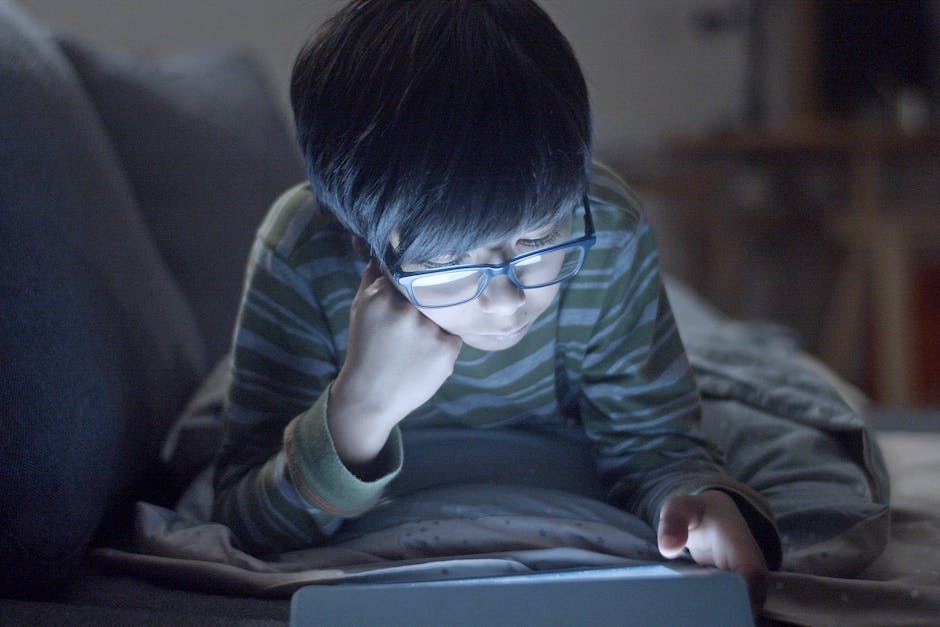
“Educational screen time” describes several activities that place very different demands on a child. The useful question is not only how long a child uses a screen, but whether they watch, recall, create, reason, or make decisions that change what happens next.
At 6:40 on a rainy Tuesday in Bristol, Lena is trying to finish dinner while her eight-year-old son, Theo, uses the family tablet. He has already watched two science videos and completed a quiz that rewarded each correct answer with coins. Now Lena needs to decide whether another twenty minutes would help or simply postpone bedtime.
The label on every activity says “educational.” That does not tell her what Theo’s mind is doing.
Four screens can ask for four different kinds of effort
Passive video asks a child to follow information selected and paced by someone else. A good explanation can introduce a difficult idea, show a volcano erupting, or model how to pronounce a sound. The child may learn from it. Yet the screen can keep moving even when attention drifts, and watching alone gives a parent little evidence that understanding has changed.
Quiz apps ask for retrieval or recognition. A child chooses an answer, receives a mark, then moves to the next question. This can support practice, especially when questions match the child’s level. The weakness appears when the quiz serves mainly as a toll booth between the child and a separate reward. If the arithmetic earns a spin of a wheel, the wheel may become the real reason to continue.
Creative tools ask a child to make something: a drawing, melody, animation, story, or small program. They invite choices and revision. A blank canvas can also demand more planning, language, or technical control than a younger child has available, so adult support and thoughtful starting materials matter.
Intrinsic learning games place the learning task inside the action itself. Routing a train requires reasoning about instructions. Completing a circuit requires testing which connection works. Building a word requires hearing and arranging its sounds. Remove the subject knowledge and the play no longer works.
That distinction is practical. A parent can look past the reward animation and inspect what the child must actually think about.
Watch what happens after a wrong answer
Theo reaches a fractions activity. He chooses the wrong piece twice, and the app flashes a red mark before offering another chance at the same-looking question. His shoulders rise. Lena can see the likely ending: he will guess until the reward appears, then insist that he has finished. The tablet will have stayed quiet, but the fraction will remain unclear.
She switches to a game where the pieces control a balance mechanism. Theo moves one part, watches the machine tilt, then replaces it with two smaller parts. The screen still grades the answer, but the representation gives him something to reason about. He pauses before touching the next piece.
That pause matters.
A productive learning activity makes a wrong answer informative. It might expose an incorrect prediction, show a route stopping short, leave a machine unbalanced, or gently lower the difficulty after repeated struggle. The child should have a reason to reconsider, rather than a reason to tap faster.
This is one reason screen time totals can hide more than they reveal. Two twenty-minute sessions can differ in attention, decision-making, frustration, feedback, and mastery. Even discussion suggesting that higher screen time may support adolescent cognitive development needs this distinction: duration alone cannot describe the activity taking place on the screen.
Use the child’s behaviour as evidence
Parents do not need to conduct a formal lesson observation. A minute beside the child can reveal the shape of the activity.
Notice what happens when you ask, “What are you trying to do?” A child watching a video may describe the topic. A child chasing rewards may describe the coins. A child engaged in intrinsic play can often describe the problem: “I need the train to reach that station,” or “These two pieces have to balance.”
Then watch the next mistake. Does the activity help the child revise a thought, or merely repeat the prompt? Does it adapt when the challenge is far too easy or repeatedly overwhelming? Can the child explain why a different choice might work?
Finally, look at the ending. Streak loss, countdowns, loot boxes, and endless reward loops create pressure to continue for reasons unrelated to learning. A session summary, a completed structure, or a natural stopping point lets the child leave with a sense of completion. The shape of that finish can make handing back the family tablet much easier.
Choose the screen by the job it needs to do
Passive video can introduce. Quiz practice can strengthen recall. Creative tools can support expression. Intrinsic learning games can turn subject knowledge into purposeful action. None of these formats deserves one automatic verdict, and none should borrow credibility from the word “educational” alone.
Choose according to the job. If Theo needs to see how a food chain works, an illustrated explanation may help. If he needs fluent number facts, short retrieval practice may fit. If he needs to explore rhythm, making and replaying a pattern may be more useful. If he needs to understand fractions, give him a system whose behaviour depends on the fractions he chooses.
Later that Tuesday, Lena asks Theo what happened on the tablet. He does not mention points. He holds two fingers level like the arms of the machine and says, “These were different pieces, but they made the same amount.”
Dinner is getting cold. The tablet is back on the counter. The idea has followed him away from the screen.
Comments
No comments yet.